Textual Chef Textual Chef

Bibim Guksu (Spicy Cold Noodles)

A refreshing Korean cold noodle dish where thin somyeon or soba noodles are tossed in a sweet, tangy, and spicy gochujang dressing with crisp cucumber and a soft-boiled egg.

25 minEasyServes 2380 cal/serving

KoreanLunchStovetopVegetarianHigh FiberPork-FreeCorn-Free

Cook this free in the appFree. No download, no account. The screen stays awake and each step can run its own timer.

Ingredients

  • 6 oz somyeon or thin soba noodles
  • 2 tbsp gochujang (Korean chili paste)
  • 2 tbsp rice vinegar
  • 2 tsp soy sauce
  • 2 tsp granulated sugar
  • 2 tsp toasted sesame oil
  • 1 garlic clove, minced
  • 1 Persian or English cucumber, julienned
  • 2 large eggs, soft-boiled, halved
  • 2 tsp toasted sesame seeds
  • as needed ice cubes

Instructions

  1. 1

    Bring a pot of water to a boil. Cook 2 large eggs for 6 to 7 minutes for a jammy yolk, then transfer to an ice bath. Peel and halve when cool.

  2. 2

    In the same pot, cook 6 oz somyeon or thin soba noodles according to package directions. Drain, then immediately rinse under cold running water, rubbing to remove starch. Transfer to ice cubes water for 1 minute to chill completely. Drain well.

  3. 3

    In a small bowl, whisk together 2 tbsp gochujang (Korean chili paste), 2 tbsp rice vinegar, 2 tsp soy sauce, 2 tsp granulated sugar, 2 tsp toasted sesame oil, and 1 minced garlic clove until smooth.

  4. 4

    Add the drained somyeon or thin soba noodles to a large bowl. Pour the sauce over and toss vigorously until every strand is well coated.

  5. 5

    Divide into serving bowls. Top with 1 julienned Persian or English cucumber, the halved large eggs, and a sprinkle of 2 tsp toasted sesame seeds. Serve immediately.

Cook this free in the appCooking it now? The app keeps the screen awake and times each step. Free, nothing to install.
Keep this recipe

Prints the ingredients and method only.

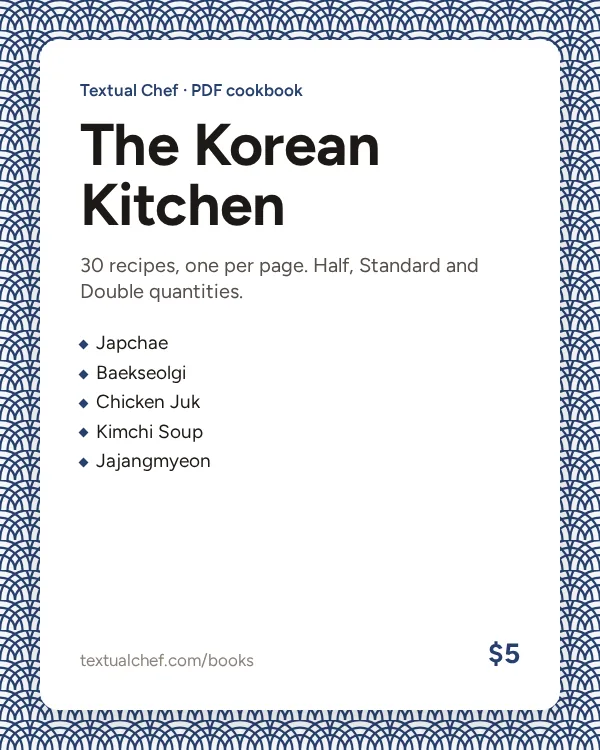
The Korean Kitchen 30 recipes from this kitchen in one printable PDF. $5, no account.

Questions

Is there a substitute for gochujang in Bibim Guksu (Spicy Cold Noodles)?

The entry for Bibim Guksu (Spicy Cold Noodles) calls for 2 tbsp gochujang (Korean chili paste). In its place: Mix two parts sriracha or another chili paste with one part white miso and a pinch of sugar. It lands close on heat and body and a little short on fermented depth.

How hot is Bibim Guksu (Spicy Cold Noodles)?

Moderately. The heat in Bibim Guksu (Spicy Cold Noodles) comes from 2 tbsp gochujang (Korean chili paste). For a milder plate, start with half the gochujang and add more to taste at the end; nothing else in the method changes. For more, add it at the table rather than in the pot, so everyone sets their own level.

Can I make Bibim Guksu (Spicy Cold Noodles) gluten-free?

Yes. The gluten in Bibim Guksu (Spicy Cold Noodles) is 6 oz somyeon or thin soba noodles, 2 tsp soy sauce. Swap the pasta for a gluten-free one, cooked a minute short of its package time; the soy-based sauce for tamari or coconut aminos. Everything else proceeds as written.

Is Bibim Guksu (Spicy Cold Noodles) vegan?

No, though it is vegetarian. What keeps it from vegan is 2 large eggs, soft-boiled, halved. For fully plant-based entries, see the vegan lunch collection.

Does Bibim Guksu (Spicy Cold Noodles) contain sesame?

Yes: 2 tsp toasted sesame oil and 2 tsp toasted sesame seeds. The full allergen list for this entry is gluten, eggs, soy and sesame. Seeds used as a garnish can simply be left off; the oil has no true substitute. Packaged ingredients vary by brand, so check labels if the allergy is serious.

How many calories are in Bibim Guksu (Spicy Cold Noodles)?

One serving (the recipe makes 2) is about 380 calories, with 22 g protein, 52 g carbohydrate and 12 g fat, plus 5 g fiber and 500 mg sodium. The figures are estimates computed from the ingredient list.

How do I store and reheat Bibim Guksu (Spicy Cold Noodles)?

Refrigerate what is left of Bibim Guksu (Spicy Cold Noodles) within two hours and eat it within three days. Reheat gently on the stovetop. The grain firms up as it chills; add a spoonful of water before reheating.

Serve it with

Cook this free in the app

Textual Chef is 4,544 plain-text recipes, free to read and free to cook from. No account, no paywall, no ads, no life stories. Open this one in the app and each quantity sits inside the step that uses it, so you read once and cook.

Every recipe is curated or public-domain sourced, written to one template and checked before it publishes. Nothing here is a scraped blog post.

Cook this free in the appNo download needed. It opens in your browser. The kitchen tools (planner, shopping list, pantry, import) are $5.33 a month billed annually; the first 30 days are free.