Textual Chef Textual Chef

Gyudon Beef Bowl

A Japanese fast-food classic of thinly sliced beef and onions simmered in a savory-sweet dashi broth, served over steamed rice with a soft poached egg.

35 minEasyServes 4540 cal/serving

JapaneseDinnerStovetopHigh ProteinDairy-FreeNightshade-FreeCorn-Free

Cook this free in the appFree. No download, no account. The screen stays awake and each step can run its own timer.

Ingredients

  • 1.5 lbs thinly sliced beef ribeye or chuck (shabu-shabu style), thinly sliced
  • 2 medium yellow onion, thinly sliced
  • 1 cup dashi stock (or chicken broth)
  • 1/4 cup soy sauce
  • 1/4 cup mirin
  • 1/4 cup sake (or dry sherry)
  • 2 tsp granulated sugar
  • 4 cups short-grain white rice, cooked and hot
  • 4 large eggs, soft poached
  • 4 green onions, thinly sliced
  • 1/4 cup pickled ginger (beni shoga)

Instructions

  1. 1

    Combine 1 cup dashi stock (or chicken broth), 1/4 cup soy sauce, 1/4 cup mirin, 1/4 cup sake (or dry sherry), and 2 tsp granulated sugar in a wide skillet and bring to a simmer over medium heat.

  2. 2

    Add 2 medium thinly sliced yellow onion and cook until softened, about 5 minutes.

  3. 3

    Add 1.5 lbs thinly sliced thinly sliced beef ribeye or chuck (shabu-shabu style), separating the slices. Simmer over medium-low heat until cooked through with no pink remaining, about 3 to 4 minutes, reaching an internal temperature of at least 160 degrees F (71 degrees C).

  4. 4

    Bring a small pot of water to a gentle simmer. Lower 4 large eggs in their shells and cook exactly 6 minutes for a soft yolk. Transfer to an ice bath for 1 minute, then peel.

  5. 5

    Divide 4 cups cooked and hot short-grain white rice among bowls. Ladle beef and onion mixture with broth over the rice.

  6. 6

    Nestle an egg in each bowl. Top with 4 thinly sliced green onions and 1/4 cup pickled ginger (beni shoga). Serve immediately.

Cook this free in the appCooking it now? The app keeps the screen awake and times each step. Free, nothing to install.
Keep this recipe

Prints the ingredients and method only.

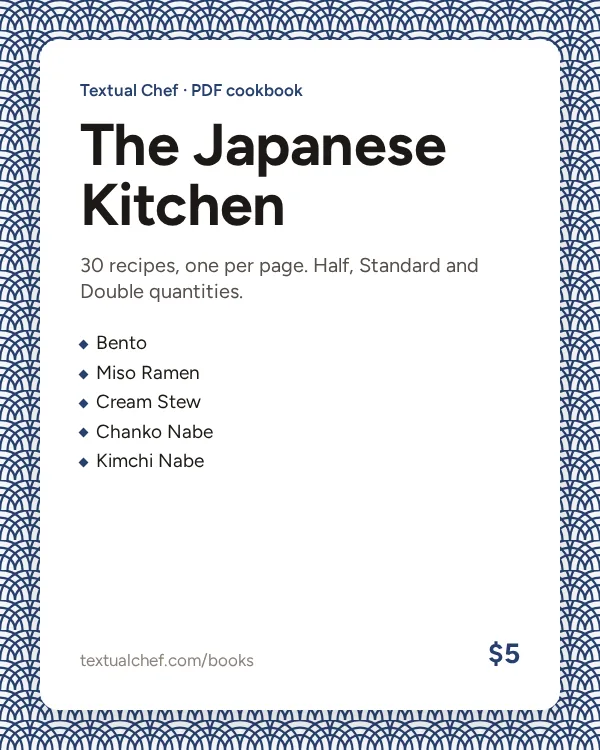
The Japanese Kitchen 30 recipes from this kitchen in one printable PDF. $5, no account.

Questions

What internal temperature should Gyudon Beef Bowl reach?

For Gyudon Beef Bowl, the target internal temperature is 160 F (about 70 C), given in step 3. A probe thermometer removes the guesswork.

What can I use instead of sake in Gyudon Beef Bowl?

The entry for Gyudon Beef Bowl calls for 1/4 cup sake (or dry sherry). In its place: Dry sherry or a dry white wine does the same job. For no alcohol, use water or light stock with a few drops of rice vinegar.

Can I make Gyudon Beef Bowl gluten-free?

Yes. The gluten in Gyudon Beef Bowl is 1/4 cup soy sauce. Swap the soy-based sauce for tamari or coconut aminos. Everything else proceeds as written.

Does Gyudon Beef Bowl contain soy?

Yes: 1/4 cup soy sauce. The full allergen list for this entry is gluten, eggs and soy. Packaged ingredients vary by brand, so check labels if the allergy is serious.

How many calories are in Gyudon Beef Bowl?

One serving (the recipe makes 4) is about 540 calories, with 45 g protein, 60 g carbohydrate and 15 g fat, plus 1 g fiber and 620 mg sodium. The figures are estimates computed from the ingredient list.

How long does Gyudon Beef Bowl keep?

Refrigerate what is left of Gyudon Beef Bowl within two hours and eat it within three days. Reheat gently on the stovetop. The grain firms up as it chills; add a spoonful of water before reheating.

Serve it with

Cook this free in the app

Textual Chef is 4,544 plain-text recipes, free to read and free to cook from. No account, no paywall, no ads, no life stories. Open this one in the app and each quantity sits inside the step that uses it, so you read once and cook.

Every recipe is curated or public-domain sourced, written to one template and checked before it publishes. Nothing here is a scraped blog post.

Cook this free in the appNo download needed. It opens in your browser. The kitchen tools (planner, shopping list, pantry, import) are $5.33 a month billed annually; the first 30 days are free.